

























TL;DR
If you’ve ever dropped thousands on a mailing and heard nothing but crickets, it’s not that your offer was bad, it’s that the design buried it. Following direct mail design best practices isn’t about making something “pretty.” It’s about making it clear. If someone can’t get your message in 5 seconds, the piece gets ignored. Good design makes your offer readable, your CTA impossible to miss, and your budget work harder.
Why Direct Mail Design Still Matters
Advisors tell us all the time: “I had a great offer, but no one responded.”
Nine times out of ten, the offer wasn’t the issue, the design killed it.
You only get one shot at attention: one headline, one image, one CTA.
- A Michigan advisor buried his call-to-action in the last paragraph. Nobody called.
Another sent a beautiful, text-heavy letter. Clients tossed it before finding the point.
Here’s the reality: 90% of direct mail gets opened. But the open isn’t the win, it’s whether your design makes someone take action.
Core Principles: Direct Mail Design Best Practices
1. Visual Hierarchy
Guide the eye: headline → key image → CTA. Every element should pull people toward action.
2. Readability First
No walls of text. Use clear fonts, strong contrast, and white space. Make it scannable.
3. Color With Purpose
Color should carry meaning, not decoration:
- Retirement planning → muted blues/greens for stability
- Debt relief → red for urgency, paired with a bold CTA
Community events → warm tones for approachability
4. Clear Call-to-Action
If your CTA isn’t visible in 3 seconds, it doesn’t exist. Put it on the front, repeat it on the back, and offer multiple ways to act (phone, web, QR).
These are the fundamentals behind the best direct mail design strategies that consistently drive results.
Want to go deeper? Check out our guide on the Crucial Elements of Direct Mail Design to see the must-have details every mailer needs to perform.
How to Design Direct Mail
Knowing the principles is one thing, putting them into practice is another. Here’s a step-by-step way to design direct mail that gets noticed and acted on:
- Start with your offer. Before touching layout or colors, get crystal clear on what you’re asking the reader to do and why it matters to them.
- Write a headline that delivers a benefit. Skip the clever wordplay, state the value in plain language.
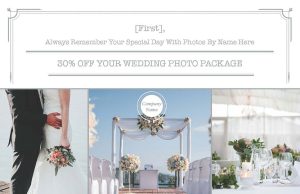
- Choose one main image that reinforces the message. The visual should be aligned with your brand, support the campaign objective, and make the offer feel more relatable.
- Structure your copy for scanning. Use short paragraphs, bullets, and subheads so someone can understand the offer without reading every word.
- Highlight your call-to-action in multiple spots. Place it on the front, repeat it on the back, and offer more than one way to respond (phone, web, QR).
- Match your design to your brand. Fonts, colors, and tone should feel consistent with your website, emails, and ads so prospects recognize you immediately.
Do a quick gut-check before print. Ask: Can someone understand the offer in 5 seconds? Does the piece look trustworthy? Would I keep this if it landed in my mailbox?
Direct mail design works best when it’s rooted in clarity, consistency, and credibility. Design is not just decoration.
Applying these direct mail design best practices ensures your campaign isn’t just designed well. it’s designed to perform.
Direct Mail Design Mistakes to Avoid
- Dense, intimidating text blocks
- Stock photos that scream “template”
- CTAs hidden in fine print
Designs that don’t match your website or ads
Most direct mailer design fails come from cluttered layouts, hidden CTAs, or visuals that don’t connect with the brand.
The Psychology Behind Direct Mail Design
Your prospects don’t read mailers line by line, they make fast judgments in three to five seconds. Design shapes those judgments. Understanding a few core psychological triggers can turn a piece from “junk mail” into a response driver:
- Attention is scarce. The human brain filters out clutter. A clear headline, a single strong image, and white space help your piece cut through the noise.
- People trust what feels familiar. Consistency with your brand colors, fonts, and tone signals reliability. When the design matches your website or ads, prospects know it’s you—and that builds credibility.
- Emotions drive decisions. A sterile, generic stock image won’t move anyone. But a photo of a couple enjoying retirement or a family smiling after a financial planning session taps into real goals and feelings.
- Clarity reduces friction. The easier it is to see the offer and how to respond, the more likely someone is to act. Hidden or overcomplicated CTAs trigger hesitation instead of momentum.
Social proof reinforces trust. Small design details, like a testimonial pull quote or an association logo—work because people want reassurance they’re making a safe choice.
In short, the look and layout of your mailer guide how prospects feel about your brand and whether they take the next step. When your design mirrors their reality and reduces decision friction, response rates climb.
Testing and Iteration
Good design isn’t one-and-done. Even small tweaks can lift response rates 20–30%.
Simple A/B tests to try:
- Two headlines
- CTA placement (front vs. back)
Postcard vs. letter format
Most advisors don’t have time to test. That’s where we come in.
Integration With Digital Channels
Your mailer should connect seamlessly with digital:
- QR codes to a clean landing page
- Trackable links to measure responses
Consistent visuals with your online ads
That’s how direct mail becomes scalable and measurable.
Direct Mail Design Examples by Industry
Here are some of the most effective direct mail designs tailored to different industries
- Financial Advisors: Neutral colors, clean type, trust-focused CTAs.
- Healthcare: Human imagery, accessible language, consult-driven CTAs.
Real Estate: Property photos, urgency-driven CTAs like “Book your tour today.”
The principles are the same; execution shifts by industry.
Bonus: Proof in Your Design
Design doubles as proof of credibility. Add:
- Association logos
- One-line testimonials with photos
Trust markers like “Serving Ohio families for 20+ years”
These signals keep your piece out of the trash and in the hands of prospects.
Cost vs. ROI in Design
- Weak headline? Cuts response in half.
- Visible CTA? Can double calls.
Clear design? Saves wasted postage and print.
Good design doesn’t cost, it pays.
Compliance & Trust Factors
Especially in finance and healthcare:
- No exaggerated promises
- Disclaimers visible but not dominant
Back up claims with logos and proof
Trust isn’t optional, it’s the end goal.
Quick Checklist Before You Print
Use this quick list to confirm your piece follows direct mail design best practices before sending it to print.

If you can’t check these boxes, pause before sending to print.
Next in the Series
This is your foundation. Next up: 10 Direct Mail Design Ideas That Work in 2025.
FAQs
Does paper quality matter?
Absolutely. Solid stock builds credibility. Flimsy paper undermines it.
What is direct mail marketing?
Direct mail marketing is the strategy of sending printed pieces—like postcards, letters, or brochures—to a targeted audience to generate leads or sales.
How effective is direct mail marketing today?
Direct mail is still highly effective: up to 90% of pieces get opened, and strong design with visible CTAs can outperform digital-only campaigns.
How much does a direct mail campaign cost?
Costs vary depending on volume, format, paper quality, and postage. Contact us for a free quote.
How do you optimize a direct mail campaign?
By testing headlines, CTA placement, and formats (postcard vs. letter), using consistent branding, and integrating with digital tracking to measure success and improve ROI.
What makes a good direct mail design?
A good direct mail design is clear, easy to scan, and built around a call-to-action that’s visible within seconds.
Why is visual hierarchy important in direct mail design?
Because it guides the reader’s eye: first the headline, then the key image, and finally the action you want them to take.
Should direct mail be colorful or minimal?
It depends on your brand and goals, but the key is using colors that are easy to process and reinforce your message without overwhelming.
Is it worth investing in design if my offer is already strong?
Yes. A great offer won’t deliver results if it’s buried in confusing or unattractive design.
How can I increase response rates from direct mail?
Use a clear CTA, clean design, and A/B testing to adjust headlines, formats, and CTA placement for higher performance.
How to design direct mail?
To design effective direct mail, start with a strong headline, use a clear visual hierarchy (headline → image → call-to-action), keep text scannable with readable fonts and white space, choose colors that support your message, and place your CTA where it can be seen in seconds. Always align the design with your brand and test small variations to improve response rates.
Final Word
Direct mail doesn’t fail because “mail is dead.” It fails because design hides the offer. Strong design doesn’t just look better, it makes your phone ring. If you don’t have time to test layouts and refine visuals, hand it to us. We’ll make sure your next piece gets read, remembered, and acted on.
Let Plum design and execute your direct mail campaign
Explore our Direct Mail services