
























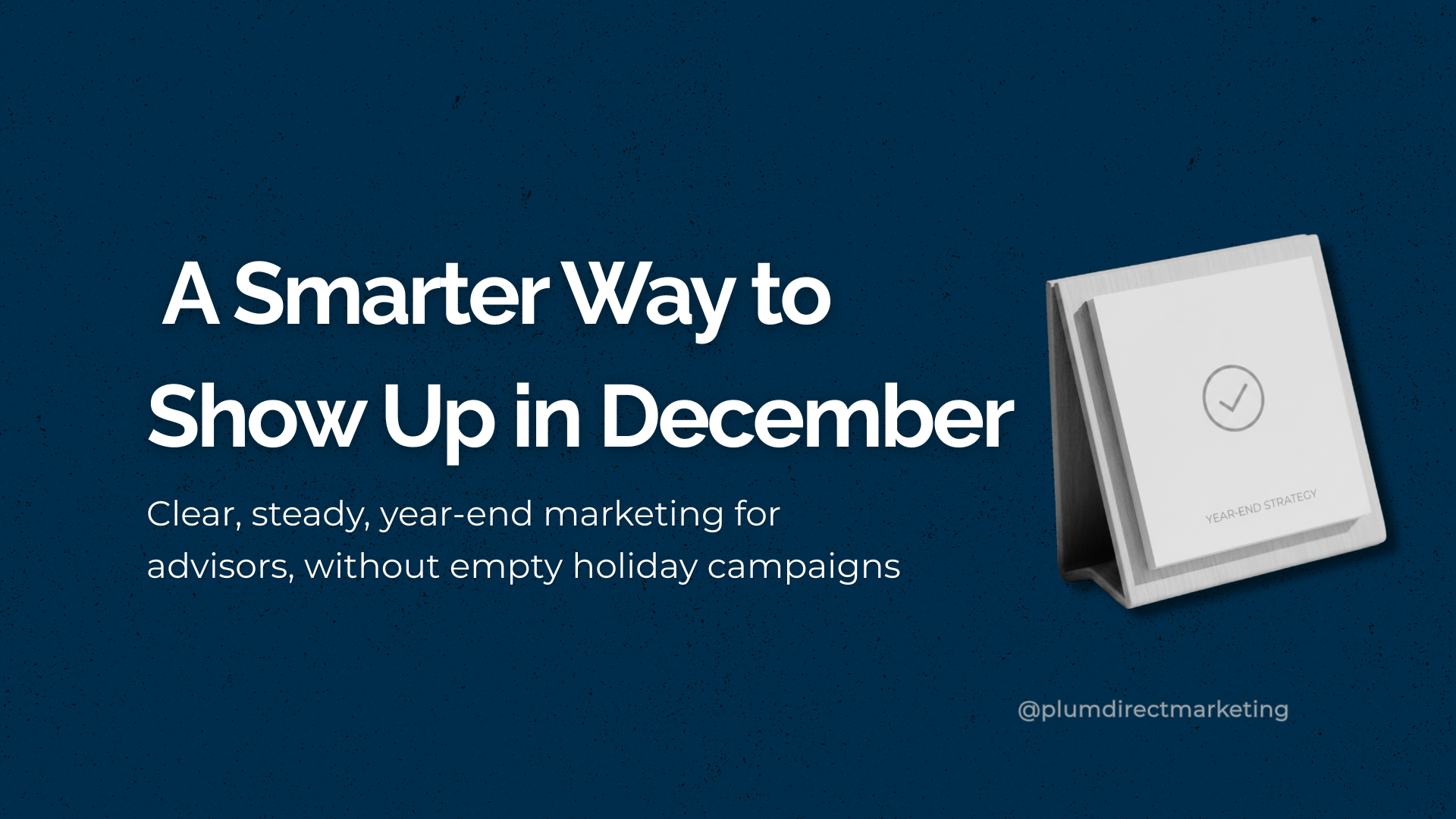
TL;DR: The Christmas season isn’t the time to “get creative.” It’s the time to be clear, human, and strategic. For financial advisors, tax professionals, and service-based business owners, December isn’t about lights and ornaments; it’s about trust, discipline, and keeping your pipeline warm without sounding desperate.
1. The truth no one says out loud: December isn’t “joyful” for most service businesses
December is a confusing month.
Your clients are tired.
You’re tired.
And somehow, the market still expects you to “show up.”
Most businesses fall into one of two traps:
- The silence trap: disappear and “come back strong in January.”
- The holiday-overload trap: generic posts, decorative emails, campaigns created just to check a box.
Neither one works.
What does work?
Staying present without overwhelming your audience, and communicating with clarity and purpose.
2. What clients actually want during Christmas (and won’t say openly)
Your clients aren’t asking for another snowflake graphic.
They aren’t waiting for another “Merry Christmas” email campaign. They want certainty.
And, they want to know:
- you’re still there
- you’re available for important decisions
- you already have a plan for January
For them, December is less celebration and more urgency: tax prep, financial decisions, renewals, regulatory changes, audits.
Your marketing needs to speak to that reality; not holiday aesthetics.
3. Three Christmas marketing moves that actually work
1. Clear, year-end guidance
Send messages that answer real client questions:
- “What changes in January?”
- “What should I prepare before the 31st?”
- “Are there financial or tax advantages I should consider now?”
More clarity. Less decoration.
2. Human content; without the performance
You can show the human side of your business without cliché holiday cheesiness.
For example:
- a simple team photo
- an honest thank-you
- a clear note on holiday hours and availability
That’s connection, without the clutter.
3. Direct mail with purpose
In December, “pretty” doesn’t win. Intentional does.
The piece that performs best:
- a clean, high-quality postcard with
- a real gratitude message
- a soft invitation to schedule a January review
Nothing more.
Simplicity stands out.
4. What definitely does NOT work
- Posting just to post
- Empty “Happy Holidays!” newsletters
- Forced promotions that don’t fit your service business
- Generic Canva-style holiday visuals
- Over-posting when people don’t want more content
Your audience is overloaded.
Clarity is what helps you stand out.
5. Christmas isn’t a campaign; it’s a strategic closing moment
The businesses that grow in January have something in common:
They start preparing in December.
As 2026 approaches, clarity becomes a competitive advantage.
While others slow down, you move one step ahead by:
- seeding January conversations
- organizing your pipeline
- communicating priorities early
- reinforcing your position as the steady, strategic partner
It’s not “holiday marketing.”
It’s using December intentionally.
6. What you can send this week that will generate real traction in January
A few moves you can execute immediately:
Email:
“Three decisions to review before December 31.”
Post:
“What changes for clients in 2026.”
Postcard:
Gratitude + light January invitation.
You don’t need more.
You just need to do it well.
FAQs
1. What kind of Christmas content should financial advisors and tax professionals post?
Share practical year-end guidance: deadlines, regulatory changes, tax prep reminders, key decisions for January, and short checklists. In December, useful beats festive.
2. How can I avoid generic holiday marketing?
Skip decorative messages. Focus on clarity: service updates, thank-you notes, year-end recommendations, and team availability. Authentic, grounded communication performs better than holiday stock imagery.
3. Does Christmas marketing even work for service-based businesses?
Yes. When it’s strategic and helpful. Clients are overloaded, so targeted, relevant, and timely content stands out more than flashy holiday campaigns.
4. What kind of direct mail works best during Christmas?
A clean postcard with:
- a genuine gratitude message
- a soft CTA to schedule a January review
No heavy promotions. No complex campaigns.
5. When is the best time to send Christmas messages to clients?
Between December 10–20.
Earlier than that, clients are still in work mode; later than that, they’re mentally checked out. Keep your message brief and practical.
6. How can Christmas marketing help me drive January conversions?
Use December to plant the seeds:
- send a year-end checklist
- highlight January changes
- invite clients to book January appointments early
It’s less about selling now and more about setting up strong momentum for the new year.
If you want to close the year with clear, human, conversion-ready messaging, without falling into empty holiday fillers, we can help you build a strategic December that leads to a stronger January.