




























TL;DR
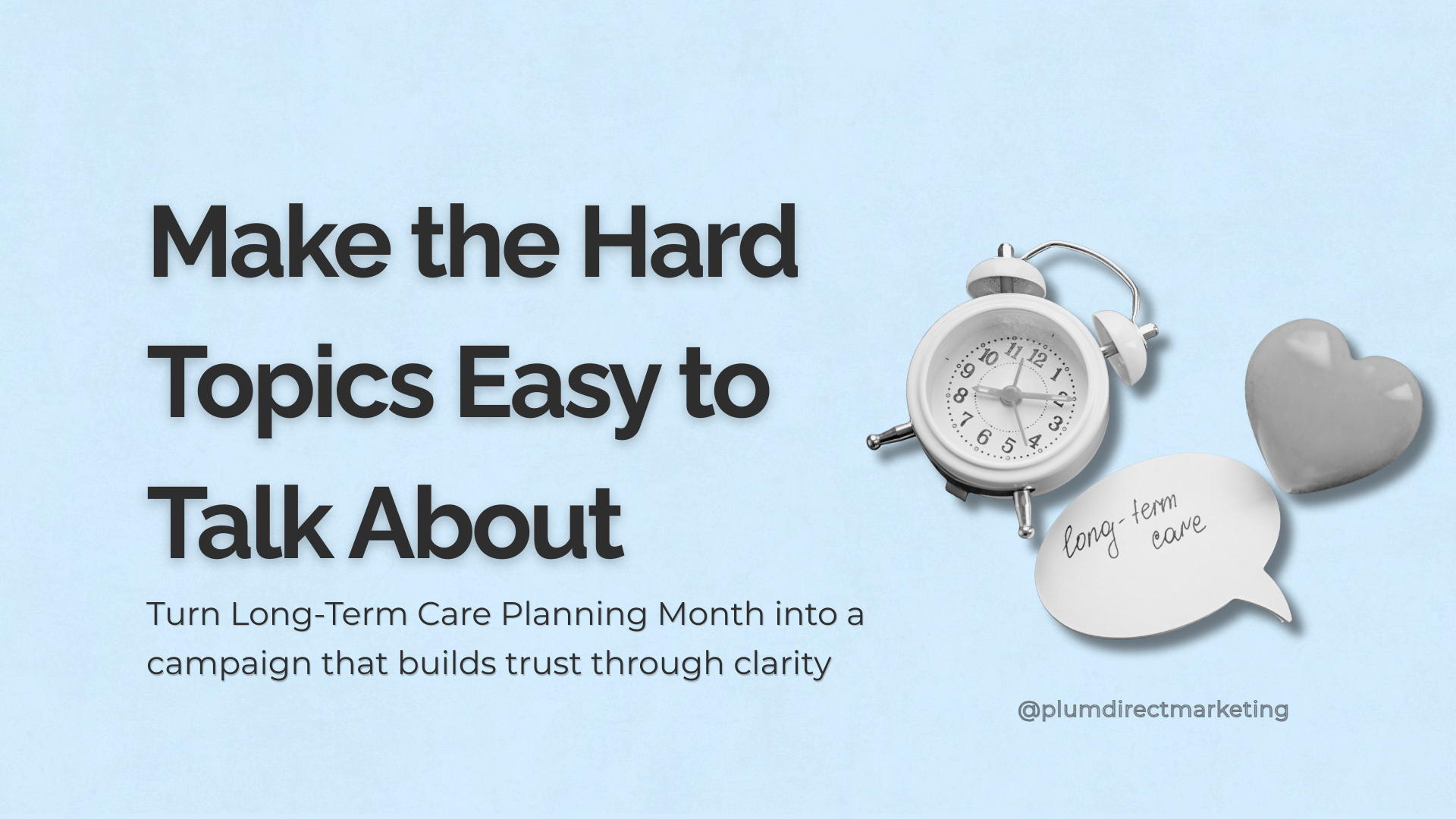
October is Long-Term Care Planning Month, one more built-in opportunity to reach out, educate, and connect with clients on a topic they often avoid until it’s urgent. For service professionals, this isn’t the only chance to bring it up, but it is a timely moment to position yourself as a trusted resource. This guide shows you what works, what doesn’t, and how to design integrated direct mail + digital campaigns that clients will actually respond to.
Why This Month Matters
Clients rarely wake up saying, “Today’s the day I want to plan for long-term care.” It’s one of those “we’ll deal with it later” topics. The problem is that “later” usually means fewer choices, higher stress, and tough family conversations.
October gives you another opening to bring it up without it feeling random. You can frame it as:
- “This month, a lot of people are revisiting long-term care planning. Have you and your family talked about what that might look like?”
And here’s how different professionals can tie it in:
- Financial Advisors → retirement risk management.
- CPAs → tax impacts and future cost projections.
- Attorneys → estate planning and protecting family assets.
- Insurance professionals → coverage gaps and what Medicare doesn’t pay.
It’s not a one-time marketing gimmick; it’s one more opportunity to step into a conversation clients are already primed to have.
What Works: Campaigns That Land
1. Lead With Education, Not Sales
Frame your content around the questions clients already ask:
- Who actually pays for long-term care?
- Does Medicare cover it?
- What happens if I wait too long to plan?
Answering these directly positions you as a guide, not a salesperson.
2. Use Multi-Channel, But Keep It Simple
- Direct Mail → Postcard: “5 Questions Families Should Ask This October.”
- Email → Short 2–3 part drip sequence with checklist or guide.
- Social → Share a story about how planning reduced family stress.
- Events → A Q&A webinar or lunch-and-learn, not a lecture.
Consistency is what builds credibility—not complexity.
3. Tell Stories Clients Recognize
Use human scenarios instead of statistics:
- Family A planned ahead → Dad chose a facility close to home, finances stayed intact, kids visited without stress.
- Family B waited → Daughter quit her job to provide care, siblings fought over money, resentment grew.
Stories like this stick with clients long after charts or percentages fade.
4. Address Objections Head-On
The pushbacks are predictable. Call them out early:
- “It’s too early.” → Planning now keeps options open.
- “It’s too expensive.” → Compare cost to the loss of control when choices are limited.
- “My kids will handle it.” → Share stories of the stress and conflict adult children face when decisions are forced.
Acknowledging objections up front builds trust.
5. Segment by Generation
- Boomers → Protecting retirement savings.
- Gen X → Managing both aging parents and their own kids.
- Millennials → Framing planning as protecting future freedom of choice.
Different priorities require different language.
What Doesn’t Work
- Generic “Happy Long-Term Care Month” posts.
- Scare tactics that paralyze instead of inform.
- One-off emails with no follow-up.
- Pushing products without education.
The Playbook: Step by Step
1. Publish Educational Content
Blog or FAQ post answering top client questions.
2. Send Direct Mail
Postcard or letter driving readers to a checklist, webinar, or guide.
3. Reinforce Digitally
Use the same message in email and LinkedIn.
4. Host a Live Touchpoint
Webinar, Q&A, or lunch-and-learn with practical resources.
5. Follow Up
Second email or mailer to nudge clients to take action.
Conversation Starters You Can Use
Sometimes the hardest part is breaking the ice. Here are three lines you can use this October:
- “October is Long-Term Care Planning Month—have you and your family talked about what kind of care you’d want if it were ever needed?”
- “A lot of clients are surprised to learn Medicare doesn’t cover most long-term care. Want me to walk you through what’s typically out-of-pocket?”
- “Even if you’re not ready to make decisions, mapping out options now reduces stress later. Should we set aside 20 minutes to explore it?”
These aren’t scripts, they’re bridges into meaningful conversations.
How to Measure What Matters
Don’t obsess over open rates or clicks. Ask:
- Did I start 3–5 client conversations I wouldn’t have had otherwise?
- Did someone forward my postcard or email to a family member?
- Did I book at least one appointment tied to this outreach?
That’s ROI that matters.
FAQs
What is long-term care planning?
It’s making financial, legal, and family decisions in advance so you’re not caught off guard later.
Who usually pays?
Most families assume Medicare covers it. It doesn’t. Without a plan, costs often land directly on the family.
What’s the biggest mistake?
Waiting. The earlier you plan, the more choices and control you have.
Beyond October: Reuse the Playbook
This isn’t a one-time play. The same framework works for:
- Financial Planning Week (October)
- Medicare Open Enrollment (Oct–Dec)
- Insurance Awareness Day (June)
- National Retirement Security Week (October)
Use these dates as recurring touchpoints so your outreach always feels timely.
Final Takeaway
Long-Term Care Planning Month is one more opportunity to bring up a tough but critical conversation. Use it to:
- Lead with education.
- Tell stories clients recognize.
- Handle objections directly.
- Generate conversations and appointments.
Start simple: tag clients over 55 and send them one useful resource this October. Small, consistent steps beat big, one-off pushes.
Quick-Action Checklist for October
If you only have a few hours this month, here’s how to make Long-Term Care Planning Month work for you:
- Tag your clients 55+ in your CRM or contact list.
- Send one resource (blog, postcard, or email) that answers “Who pays for long-term care?”
- Post one story on LinkedIn about how planning reduced stress for a real family (keep names confidential).
- Host one touchpoint—a 20-minute webinar, Q&A, or lunch-and-learn.
- Follow up personally with three clients who showed interest.
- Track success by conversations started and appointments booked, not just clicks or opens.
Keep it simple: even one action from this list moves the needle.
Next Step: Plum Direct Marketing helps service professionals turn awareness months into actionable campaigns. From postcards to webinars to digital follow-ups, we design strategies that move you from awareness → trust → booked appointments. Contact us.