




























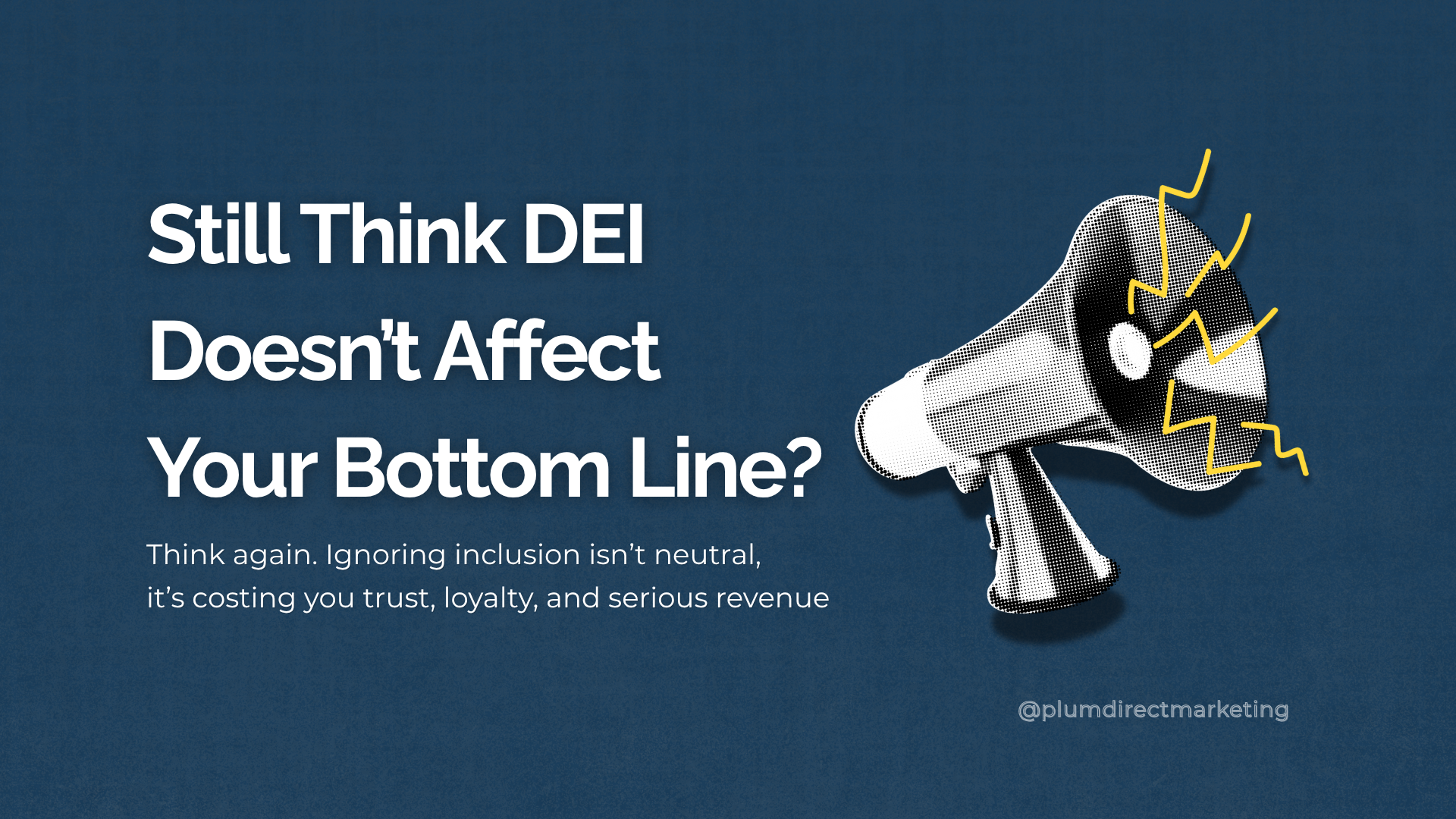
If you think DEI is irrelevant, check your revenue leaks.
Let’s Start With the Excuse That’s Costing You
“This DEI stuff has nothing to do with my growth strategy.”
You’ve probably said it.
Or thought it.
Or silently nodded when someone else said it at a conference.
It sounds focused. Efficient. Maybe even a little brave.
But here’s the problem:
That belief is not just outdated. It’s expensive.
And the longer you cling to it, the more you quietly bleed opportunity.
Disinterest Is Not Neutrality. It’s Missed Revenue.
Let’s cut the euphemisms.
If your marketing doesn’t reflect the people you say you want to serve,
they won’t trust you.
And they definitely won’t pay you.
This isn’t theory—it’s conversion math:
According to Google’s Inclusive Marketing Toolkit:
- 23% increase in brand perception
- 25% boost in purchase intent among underrepresented consumers
And Adobe’s Diversity in Advertising Report found:
- 38% of consumers are more likely to trust brands that show real diversity
- 34% have stopped supporting brands whose marketing excludes them
You’re not “staying focused.”
You’re leaving money on the table.
Why This Myth Persists
Because “inclusion” still sounds like:
- A PR move
- A political risk
- A distraction from “serious business”
But here’s what it actually is:
A segmentation strategy that sees more of the market.
The reason your materials aren’t landing with next-gen clients isn’t because they don’t need your service.
It’s because they don’t see themselves in it.
“DEI is not a vibe. It’s a strategy.”
— Janice Gassam Asare, DEI Consultant
What Exclusion Looks Like When You Don’t Mean It
Take inventory:
- Are your visuals white, suburban, and affluent by default?
- Is your language written for a client who already understands wealth, homebuying, or investing?
- Is your brand tone still stuck in “neutral” because you think that’s safe?
You’re not being neutral.
You’re being nostalgic.
And while you’re designing for comfort, your competitors are designing for conversion.
Inclusion Is a Growth Lever. Not a Distraction.
Still think “that’s not my market”?
Here’s what the actual market looks like:
- Brookings:
U.S. Latino GDP is now $2.8 trillion—growing faster than the U.S. economy itself. - McKinsey:
Black Americans hold over $1.6 trillion in spending power and are increasingly investing in homeownership, entrepreneurship, and wealth-building services. - Edelman Trust Barometer:
Gen Z and Millennial consumers are more loyal to brands that reflect their values—and more likely to walk away when they don’t.
Translation:
You’re not being selective. You’re being short-sighted.
DEI = Better Segmentation. Smarter Messaging. Higher Retention.
What happens when you treat inclusion like a growth lever?
- You attract overlooked, underserved segments
- You reduce churn because people feel seen
- You earn earlier loyalty from younger audiences
- You build trust faster with clients who don’t look like your last 10
Inclusion is not about expanding your values.
It’s about expanding your relevance.
Final Thought
You’re not getting this wrong because you’re bad at business.
You’re getting this wrong because someone convinced you DEI was a side project.
But you work with people. And money.
This isn’t a side project. It’s the whole business.
Let your competitors keep mistaking exclusion for efficiency.
You? You’re about to get a lot more strategic.
Resources for Smarter Marketing Growth
- Google’s Inclusive Marketing Toolkit – Frameworks for inclusive messaging that moves numbers
- Adobe’s Diversity in Advertising Report – What consumers expect and why exclusion costs you
- Brookings: Latino GDP Growth – Economic insight into the fastest-growing U.S. demographic
- McKinsey: Black Spending Power & Market Access – Why equity is revenue strategy
- Edelman Trust Barometer – What drives loyalty in next-gen consumers
Ready to make your marketing more inclusive, and more effective? Let Plum build a strategy that actually connects.
Coming Up Next in the Series:
You Can Stay Comfortable. Or You Can Stay Relevant.
Comfort feels safe. But it’s quietly killing your brand.
In our next article, we’ll show you what it looks like when your “safe” strategy becomes your most expensive one.
Because staying the same isn’t neutral. It’s invisible.