


























Key Takeaways
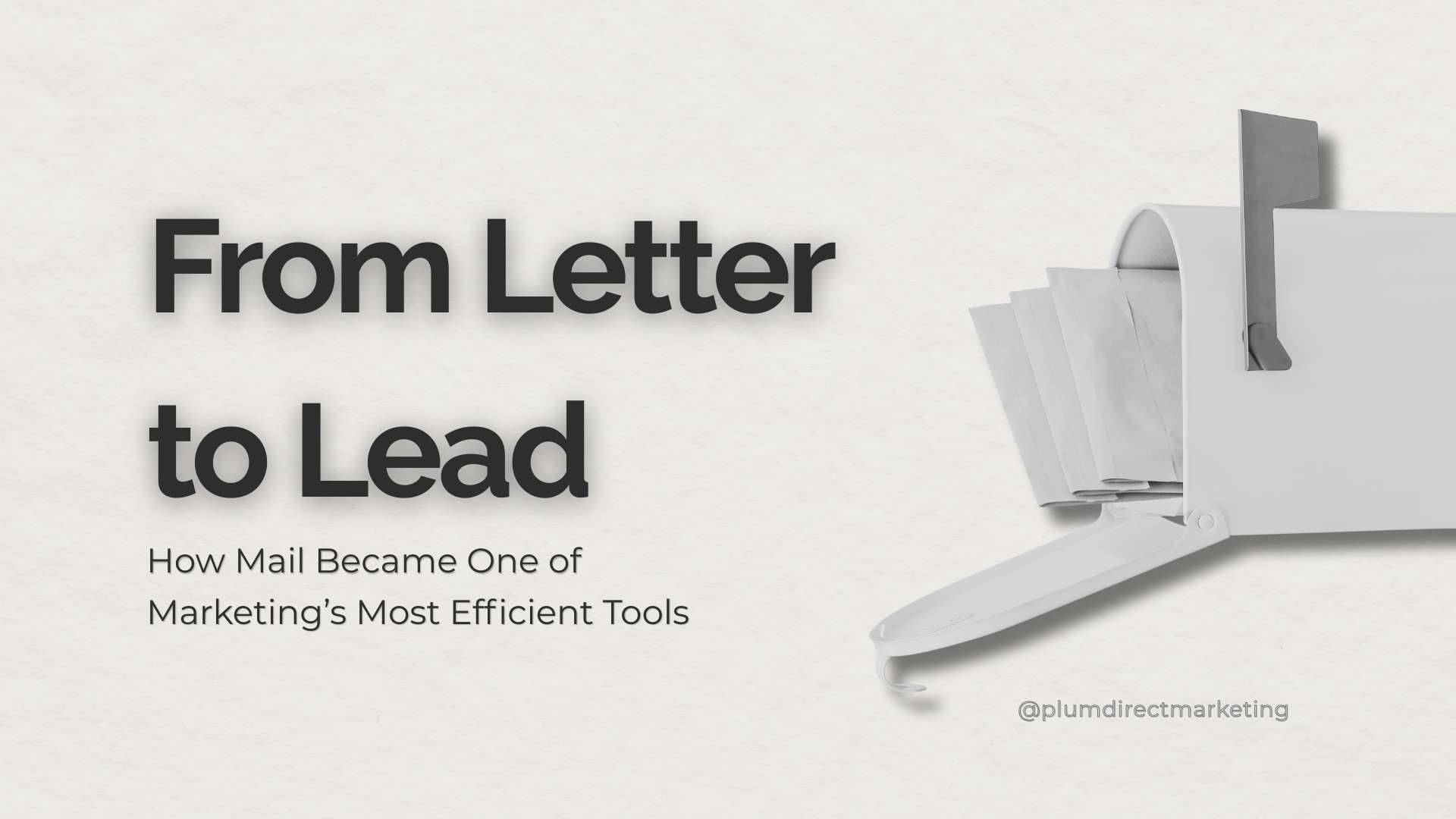
World Post Day honors the history of the postal system, but for service professionals, the real story is how mail evolved into one of the smartest lead-generation tools in 2025. From handwritten letters to postcards with QR codes, mail has always been about connection. Today, when combined with digital touchpoints like landing pages and retargeting, it transforms from a piece of paper into a measurable client acquisition channel.
A Global System With Local Reach
On October 9, World Post Day commemorates the creation of the Universal Postal Union in 1874. It was the first time mail could travel between countries under a unified set of rules, a true global network.
Fast forward to today: the same infrastructure that connects nations still delivers messages locally, reliably, and personally. A letter in the 19th century connected distant cities. A postcard in 2025 can connect a financial advisor in Michigan or a CPA in Westchester to the exact households they want to reach.
From Letters to Direct Mail: The First Marketing Evolution
In its early days, mail was purely about communication, personal letters, government notices, or business correspondence. But as businesses recognized the trust and attention that came with receiving mail, it naturally evolved into marketing:
- Catalogs introduced products at scale.
- Bills and notices built habits of checking the mailbox daily.
- Promotional letters offered services and special deals.
Mail became the original “direct response” channel: a way to reach a client without intermediaries.
Direct Mail in 2025: The Modern Evolution
With digital channels more crowded than ever, physical mail cuts through; especially when paired with digital.
Here’s how a direct mail piece works in 2025:
- A postcard or letter arrives in the mailbox.
- The piece includes a QR code or a personalized URL directing the recipient to a landing page.
- The landing page captures information and adds the person to your CRM workflow.
- A retargeting campaign keeps your message alive across Google, LinkedIn, or Facebook.
- The lead receives automated follow-ups, emails, or a call from your team; turning a simple mail piece into a qualified opportunity.
What started as a printed postcard turns into a full marketing funnel.
A Brief Timeline: From Letters to Leads
- 1874 – The Universal Postal Union
The UPU is created, making cross-border communication possible under a unified system.
- Early 1900s – Catalogs and Newsletters
Businesses discover the potential of mail to showcase products and build brand presence.
- 1980s – Direct Mail at Scale
Postcards, coupons, and promotional letters flood mailboxes, becoming a cornerstone of marketing.
- 2000s – The Email Era
Email marketing surges, but physical mail continues to provide a credibility advantage.
- 2020s – Hybrid Direct Mail
Mail evolves into a measurable lead-generation tool with QR codes, pURLs, landing pages, CRM integration, and retargeting ads.
Why It Works for Service Professionals
For advisors, CPAs, and attorneys, trust is the foundation of growth. Direct mail gives you:
- Credibility: A physical piece feels more legitimate than a banner ad.
- Access: Every household in your market has a mailbox—no platform sign-ins required.
- Focus: Mail competes with far fewer distractions than email or social.
By adding digital integration, you also gain measurable ROI and the ability to nurture leads beyond the first impression.
Practical Example: From Postcard to Appointment
Picture this: a financial advisor in Michigan sends a postcard to households within a specific ZIP code. Instead of asking for a phone call, the postcard includes a QR code with the message: “Book Your Retirement Planning Session.”
- A scan leads to a landing page with a simple scheduling tool.
- The visitor’s data goes straight into your system or contact list.
- Automated follow-ups and retargeting ads keep the advisor top of mind.
The postcard didn’t just deliver a message; it generated a qualified lead.
How to Apply This in Your Business
If you’re considering direct mail in 2025, focus on integration:
- Keep your CTA clear and simple (book, RSVP, download).
- Add QR codes, PURLs, or trackable numbers to every piece.
- Connect responses to the contact list and follow-up process.
- Layer on retargeting ads to maximize exposure.
Direct mail works best not as a stand-alone campaign but as the first touchpoint in a multi-channel strategy.
Why World Post Day Is Your Reminder
World Post Day isn’t just about the past; it’s about recognizing a communication system that has endured because it adapts. For service professionals, it’s a reminder to use that same system in smarter ways.
From letter to lead, the evolution of mail shows one thing clearly: what’s trusted doesn’t disappear, it transforms.
FAQs
What is World Post Day?
It’s celebrated every October 9 to mark the founding of the Universal Postal Union, the backbone of global mail delivery.
How has postal mail influenced marketing?
It evolved from letters and notices into catalogs, promotions, and now integrated direct mail campaigns.
Why is direct mail still relevant in 2025?
Because it cuts through digital noise, feels credible, and integrates with modern tools like QR codes and CRMs.
How do I connect direct mail to digital campaigns?
Use scannable codes, trackable URLs, or phone numbers that link mail responses directly to online funnels.
Is direct mail only for large companies?
No—local targeting makes it ideal for niche businesses like financial advisors, CPAs, and attorneys.
Ready to launch your direct mail marketing campaign?
At Plum Direct Marketing, we help service professionals turn postcards and letters into measurable lead-generation systems. This World Post Day, rethink how you can evolve mail in your own marketing mix, because the journey from letter to lead has never been more powerful. Contact us here.