




























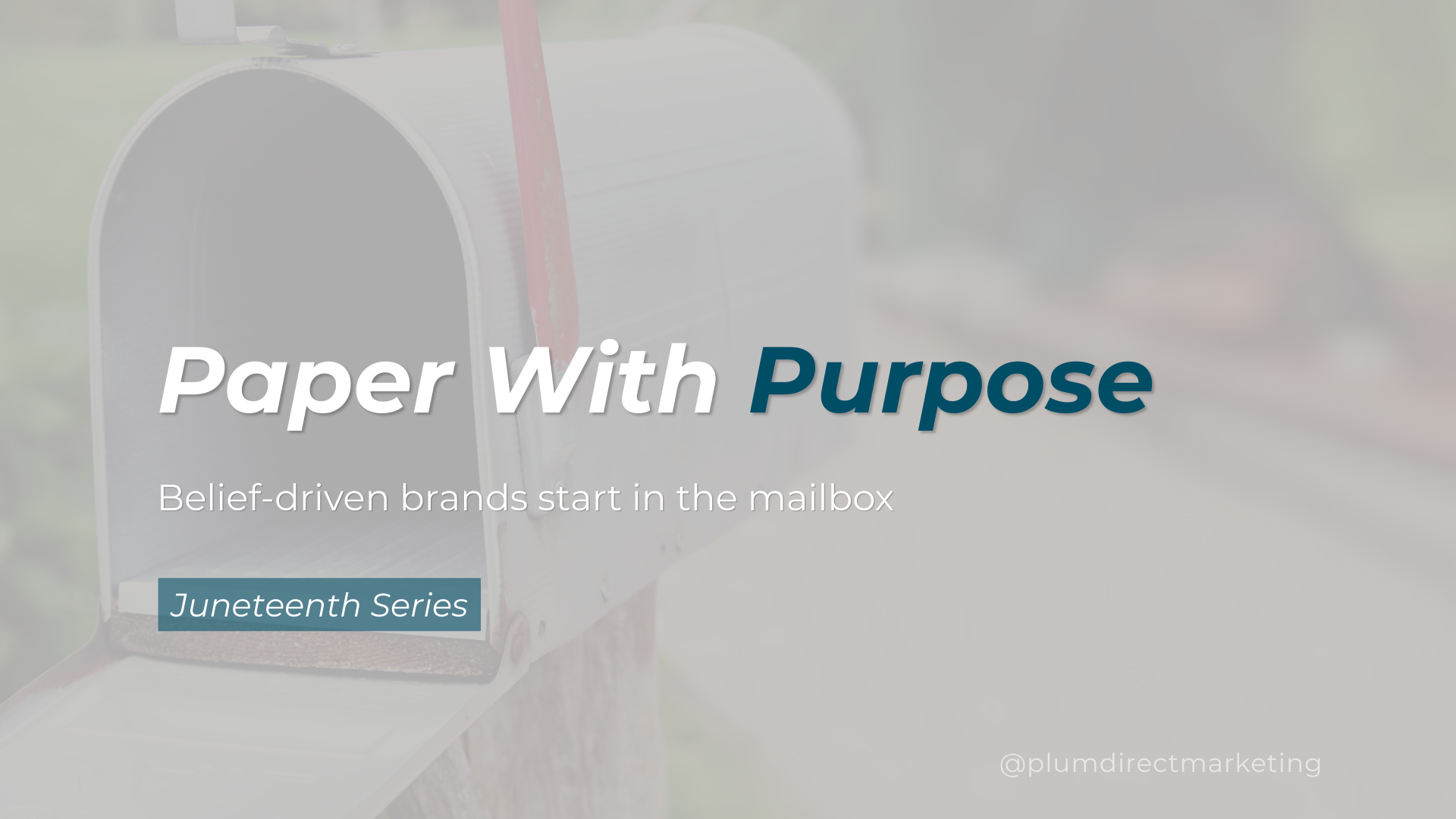
Article Nine of the Juneteenth Series — Belief Sells: The New Rules of Identity-Driven Marketing
Your client’s inbox is full of noise.
Their phone? Constant pings.
Their screen? A thousand blinking, swiping, sliding things.
But their mailbox?
Quiet.
Intentional.
The moment your brand pauses the scroll and shows up with purpose.
Let’s kill the myth right now:
The mailbox is not dead. It’s your most overlooked storytelling system.
If you’re serious about building a brand that resonates beyond a pitch and actually belongs in people’s lives, what you send on paper matters more than ever.
The Problem With Most Mail
Most direct mail isn’t wrong. It just plays it safe—prioritizing promotion over connection.
It says “buy now” instead of “believe in this.”
Leads with services instead of stories.
Talks at people instead of connecting with them.
Throughout this series, we’ve explored what identity, voice, presence, and design look like when done with care. This is where it all comes together.
Direct Mail as Storytelling
Your mail isn’t a one-off promotion. It’s an episodic story your audience lives with.
Each piece arrives in their home, finds a spot on the kitchen counter, and sometimes even makes its way onto the fridge.
And that means every touchpoint is a chance to build:
- Trust
- Recognition
- Belonging
- Meaning
According to Strata Company, brands using story-based direct mail see significantly higher retention and recall. Why? Because people don’t remember pitches. They remember how a story made them feel.
That’s the power of storytelling marketing. It bridges facts with feelings and builds emotional resonance.
Make It Measurable
A belief-driven campaign doesn’t mean abandoning performance. When designed with intent, direct mail services can deliver real, trackable results. Use QR codes, unique landing pages, or response-driven phone numbers to measure:
- Open and engagement rates
- Appointment bookings
- Client referrals
Belief matters. But so do results. You can (and should) have both.
Build a Year-Long Story, Not a One-Time Flyer
Whether you’re launching your first campaign or refining an existing one, these strategies work:
1. Define a Year-Long Story Arc
Split your mail into four chapters (seasonal or strategic). Let each quarter deepen the narrative.
Ex:
- Spring: Your Why
- Summer: Your Clients’ Stories
- Fall: Your Philosophy
- Winter: Your Legacy
2. Speak to Real People, Not Demographics
Segment by identity, not just “demo.”
Design specific stories for:
- First-gen wealth builders
- Newly independent professionals
- LGBTQ+ business owners
- Clients in transition (divorce, caregiving, retirement)
3. Layer Print + Digital Touchpoints
Use QR codes, voice notes, microsites, or personal videos to create multi-dimensional campaigns.
You don’t need to go full TikTok. You just need to meet people where they already live.
4. Lead With Belief, Not Buzzwords
Instead of saying:
“Your trusted local insurance expert”
Say:
“You’ve protected everyone else. Now let’s build something that protects you.”
That’s belief language. And it resonates because it sees them.
“As a women-focused advisor, I used seasonal mail to share stories from my clients—women rebuilding after divorce, or launching their own businesses. Each piece wasn’t just informative—it was affirming. That made the difference.”
— Carla, Independent Advisor.
Why This Matters to Juneteenth
Juneteenth isn’t just a day; it’s a narrative.
A story of freedom, ownership, identity, and presence.
When you send a message—on paper or online—you’re either reinforcing someone’s visibility or quietly erasing it.
Belief-driven direct mail doesn’t just deliver content.
It delivers belonging.
It says, “This is for you. We built this with people like you in mind.”
And that’s not just good marketing; it’s responsible communication.
Because belief-driven mail helps protect something more than visibility:
It builds legacy, strengthens reputation, and reflects the values you’ve spent a lifetime earning.
That’s how you take up space with intention and with respect.
Useful Tools + Smart References
- Microsoft Inclusive Design Toolkit – A comprehensive guide for creating inclusive experiences.
- Design Justice Network Principles – Framework for centering marginalized voices in design processes.
- Inclusive Design Principles – Practical guidelines for creating accessible and inclusive designs.
So What Do You Do With This?
If you’re sending mail, you’re already taking up physical space.
Now ask yourself: are you also making emotional space?
Are you showing up with values, voice, and vision?
Don’t just send content. Send meaning.
Where We’re Going From Here
This wraps our Juneteenth series, but not the conversation.
We’ve talked about:
- Belief as strategy (Marcus Collins)
- Branding with presence (Bozoma Saint John)
- Masculinity + emotional resonance (Jason Rosario)
- Visual identity as trust (yours)
- And now: how to send all of that through someone’s front door
Up next? It’s up to you. These stories don’t end. They continue—in the mail, in the meeting, in the message.
And with the right direct mail strategy, they become part of your brand’s long-term presence.
Let’s Help You Build the System
We design belief-driven direct mail services that:
- Tells better stories
- Respects your audience’s identity
- Reflects your brand’s real purpose
- Actually works
TL;DR (But If They Don’t Feel It, They Won’t Believe It)
- The mailbox isn’t dead—it’s intimate.
- Storytelling turns paper into purpose.
- Direct mail isn’t marketing clutter. It’s an opportunity to connect in a way digital can’t.
- Build campaigns rooted in seasons, identity, and belief. That’s how you build something worth keeping.
Great marketing doesn’t just land in a mailbox. It lands with meaning.
Whether you’re building a legacy or leading a movement. Your mail can say more.