





























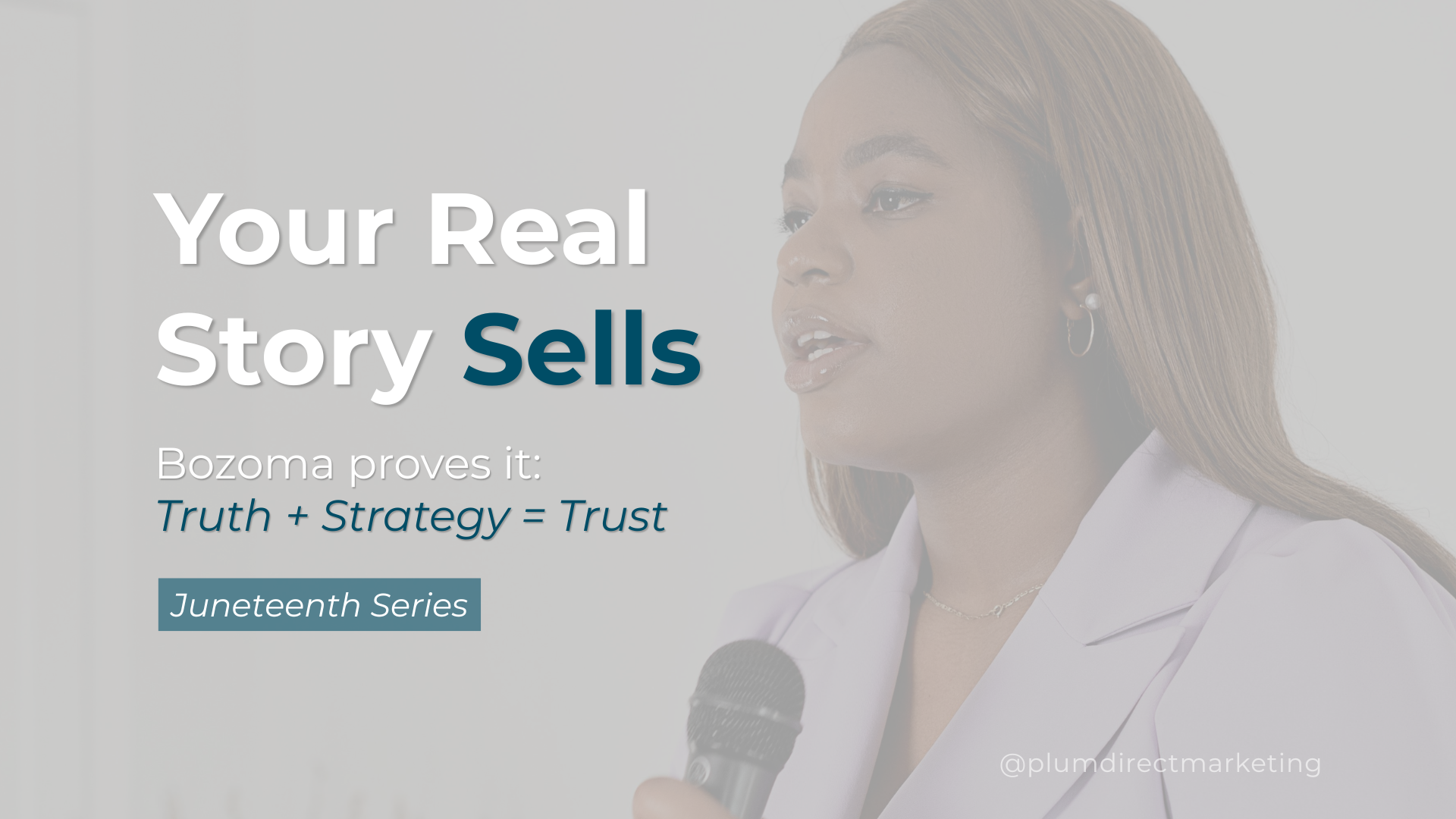
Article Five of the Juneteenth Series. Belief Sells: The New Rules of Identity-Driven Marketing
Here’s a harsh truth for anyone still clinging to their “About Us” page like a safety blanket:
No one connects with bullet points.
They connect with stories. Especially the ones that are real, a little raw, and delivered without the usual PR gloss.
And Bozoma Saint John? She doesn’t just tell stories. She weaponizes them with elegance.
Bozoma Saint John tells the truth about loss, identity, womanhood, motherhood, and leadership in a way that makes most executives look like they’re reading off cue cards.
But here’s what most people miss:
Her storytelling isn’t about vulnerability for vulnerability’s sake. It’s strategy, presence, and leadership.
And yes, it sells.
Why Storytelling Is the Smartest Risk You Can Take
When you tell your real story, why you do what you do, what you’ve overcome, what keeps you up at night, you’re not “oversharing.” You’re creating:
- Emotional proximity
- Memorability
- Differentiation
- Trust
According to Forbes,
“Storytelling remains a powerful tool in modern marketing. It can connect with audiences on an emotional level, differentiate brands in a crowded market…”
In industries like finance, insurance, and real estate, where most messaging is just “trust us” wrapped in jargon?
Your true story is your strategic story.
What Great Leaders Understand About Storytelling, and Why It Works
Let’s be clear: Bozoma doesn’t lead with tragedy.
She leads with truth.
Whether she’s talking about grief, race, womanhood, or her rise through male-dominated boardrooms, she doesn’t sanitize the pain, or over-perform it.
“The leaders who were able to keep their businesses afloat—and even transform them during this time—were those that dared to jump into the dark.”
— Bozoma Saint John via Think With Google
Boz’s brand voice feels invincible because it’s been through something.
She doesn’t sell strength. She demonstrates it—by telling the stories that made her who she is.
So… What’s This Got to Do With Direct Mail?
Everything.
Your mail doesn’t need to just “inform.”
It can connect, teach, and reveal.
In fact, ResearchGate highlights that storytelling is key to moving beyond transactions into relationships.
It’s not just about explaining your services. It’s about why you give a damn.
And that doesn’t mean breaking compliance rules or oversharing. In industries like finance, clarity and presence can coexist with discretion, and still connect powerfully.
Try This: Build a 3-Part Story Series That Sells Without Pitching
Frame it like a story arc. Use direct mail to bring your narrative into your audience’s real life.
1. “The Moment That Changed Everything”
- A turning point in your personal or professional life.
- Vulnerable, not dramatic.
- Example: “The day I had to explain retirement to my mother… and realized no one had ever explained it to me.”
2. “The Lesson I Took From It”
- Connect that experience to your current mission.
- Example: “That’s when I decided to make financial clarity something families don’t have to figure out alone.”
3. “The Invitation”
- Invite the reader into the mission, not just the service.
- Example: “You don’t need to know everything. You just need someone who’s been there.”
Want a more formal framework? Try the Four Dimensions of Brand Storytelling: story, meaning, ritual, and media. It’s a framework from SAGE Journals that helps shape stories that move from personal insight to audience action.
Let’s say you’re a financial advisor…
Maybe you started your firm after helping your parents through a confusing retirement process. That first mailer could share that moment—the conversation that made you realize most families are underprepared.
The second mailer ties it to your mission: “That’s why I help clients make sense of their options before it’s urgent.”
And the third? A simple invitation: “You don’t need to have it all figured out. You just need someone who’s walked that path.”
When done right, storytelling saves time. It shortens the trust curve with new prospects, and strengthens the connection with your best clients. For advisors who’ve built their business on relationships, it’s not fluff, it’s leverage.
Control vs. Grace: The Storytelling Balancing Act
Bozoma’s storytelling teaches us that being in control of your message doesn’t mean being emotionally guarded.
She does three things remarkably well:
- Shares just enough to be real
- Protects what matters most
- Frames vulnerability as power, not a cry for sympathy
Watch her do this in real time: Bozoma Saint John on YouTube — no slides, no filters, but presence.
📚 Further Reading & References
- Bozoma Saint John – Official Site
- TED Talk – “The Creative Power of Your Intuition”
- Forbes – The Power of Storytelling in Modern Marketing
- Think With Google – Interview with Bozoma Saint John
- ResearchGate – The Role of Brand Storytelling in Emotional Connection
- SAGE Journals – Four Dimensions of Brand Storytelling
- YouTube – Bozoma Saint John Reflects on Her Journey
TL;DR – Truth. Legacy. Depth. Reach.
- Bozoma Saint John shows that vulnerability isn’t weakness, it’s leverage.
- Telling your story builds trust, clarity, and emotional weight, without needing a pitch.
- Direct mail isn’t just a delivery tool. It’s your most human marketing channel.
- If it shaped you, say it. If it matters, share it.
- High-stakes storytelling doesn’t just resonate, it differentiates.
Next up: Jason Rosario.
Time to explore masculinity, power, and identity, and how emotional branding can do more than sell. It can heal, disrupt, and reframe everything.
Ready to turn your story into strategy?
We’ll help you craft the message, and deliver it to the right hands.
Let Plum handle the marketing, so you can focus on what’s real. Let’s talk.